
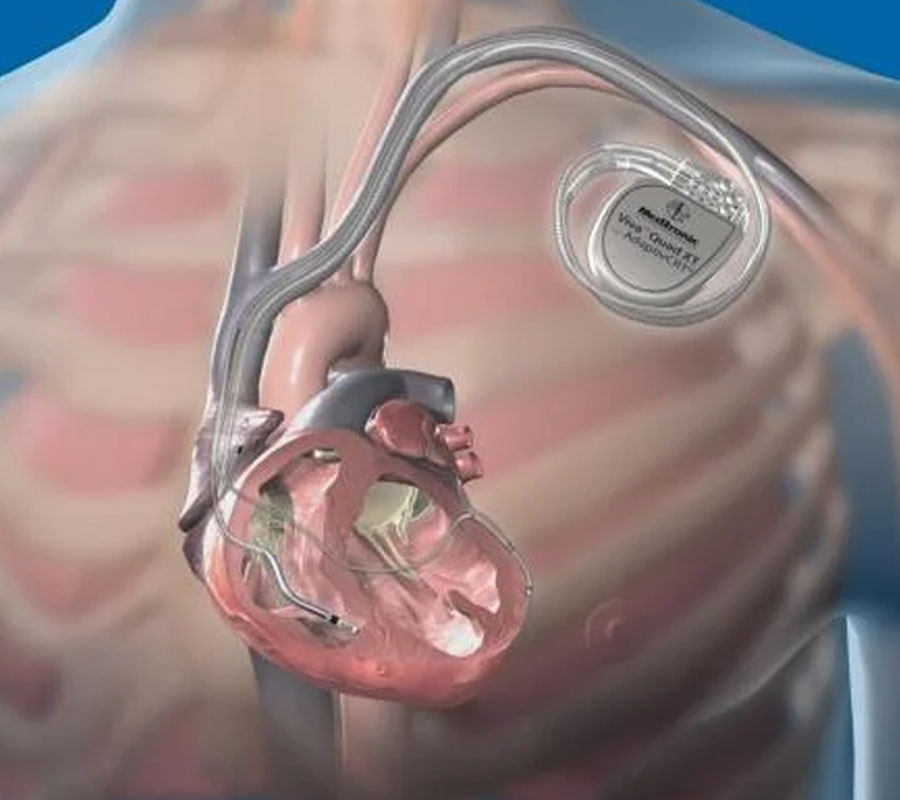
ICD and CRT-D Implantation
At our cardiac center, we offer advanced solutions like ICD (Implantable Cardioverter Defibrillator) and CRT-D (Cardiac Resynchronization Therapy Defibrillator) to manage life-threatening heart rhythm disorders and heart failure. These devices are critical for patients at risk of sudden cardiac arrest or those living with weakened heart muscles and irregular heartbeats.
What is an ICD?
An ICD (Implantable Cardioverter Defibrillator) is a small electronic device placed under the skin, usually near the collarbone. It continuously monitors your heart's rhythm. If it detects dangerous arrhythmias (like ventricular tachycardia or ventricular fibrillation), it delivers a shock to restore normal heartbeat and prevent sudden cardiac death.
What is a CRT-D?
A CRT-D (Cardiac Resynchronization Therapy with Defibrillator) is a specialized device that combines the function of a pacemaker and a defibrillator. It is designed for patients with heart failure and delayed electrical conduction in the heart. CRT-D helps coordinate the beating of the heart's ventricles, improving efficiency and reducing symptoms like fatigue, breathlessness, and swelling.
Who Needs ICD or CRT-D?
These devices are recommended for individuals who:
- Have survived a previous cardiac arrest
- Suffer from life-threatening arrhythmias
- Have weakened heart muscles (low ejection fraction)
- Experience heart failure with dyssynchronous ventricular contractions
- Are at high risk for sudden cardiac death
Procedure and Recovery
The ICD or CRT-D implantation is a minimally invasive procedure performed under local anesthesia and sedation. The device is connected to your heart through leads placed in specific heart chambers. Most patients are discharged within 24-48 hours and can resume normal activities in a few days with certain precautions.
Why Choose Us?
- Highly experienced cardiac electrophysiologist
- State-of-the-art cardiac cath lab and monitoring systems
- Holistic care including pre-implant evaluation and post-implant follow-ups
- Personalized treatment plans and patient education
- Emphasis on quality, safety, and long-term cardiac wellness